BS in civil engineering
From developing transportation networks to making clean water accessible, civil engineers impact how we live every day. Become that problem-solver with Rowan’s civil engineering program.

Why choose Rowan’s civil engineering program?
Rowan University’s Bachelor of Science (BS) in civil engineering degree program is designed for students who want to shape the systems and structures that support modern life.
Civil engineers plan, design and maintain the built environment, including bridges, transportation networks, water resources and sustainable infrastructure. Our civil engineering program gives you the technical foundation and professional perspective to take on that responsibility.
As a civil engineering major, you’ll study core engineering principles and choose from five concentration areas: environmental, geotechnical, structural, transportation or water resources engineering. You’ll also take part in Rowan’s Engineering Clinics beginning your first year, where you’ll collaborate with peers and faculty on projects for industry and government partners. Because of this early, hands-on experience and the program’s ABET accreditation, you’ll enter the field with a competitive edge—equipped with knowledge and practical expertise employers and graduate schools seek.
Key considerations
Quick Facts
Months To Complete
Credits
Application Deadlines
Fall Entry Term
Spring Entry Term
Summer Entry Term
Studying civil engineering at Rowan
What You'll Learn
In the 120-credit civil engineering major, you’ll move through a clear progression of ABET-accredited courses that build your knowledge step by step. Your foundation classes in math, physics, chemistry and computer programming give you the tools to solve engineering problems, while surveying and solid mechanics classes introduce you to the basics of how structures stand and function.
Mid-level courses take you further into the field with structural analysis, geotechnical systems, water resources, transportation and environmental treatment processes. By your senior year, you’ll apply that knowledge in design-focused courses. Throughout the entire program, you’ll participate in hands-on learning experiences.
In addition to required coursework, you’ll complete engineering electives that let you shape your degree around your interests by selecting one of the following undergraduate concentrations:
- Environmental Engineering
- Geotechnical Engineering
- Structural Engineering
- Transportation Engineering
- Water Resources Engineering
Civil engineering key courses
- Civil Engineering Systems
- Dynamics
- Engineering Graphics
- Field Surveying
- Mathematics for Engineering Analysis
- Solid Mechanics
Note: The course information above is not official and is subject to change. For an official list of available courses, please review the Rowan University Academic Catalog.
How You'll Learn
The civil engineering program at Rowan is all about applying your knowledge in practical, hands-on ways. You’ll have multiple opportunities to problem-solve and test your skills in real engineering settings through:
- Engineering Clinics: Every semester, you’ll collaborate with faculty members and peers to solve challenges for our industry and government partners.
- PIPES Program: The Professional Industrial Partnership Engagement for Students (PIPES) program allows you to work for an engineering firm full-time during your junior or senior year.
- Capstone Design Projects: In your senior year, you’ll work on complex, team-based design problems that reflect real-world engineering practice. You’ll produce detailed reports and present your solutions to faculty and professionals.
- Professional Practice Seminars: Through workshops and seminars, you’ll explore the business side of engineering, from contracts and project scheduling to budgets and ethics, so you understand what it takes to succeed in the field.
- Student Organizations: Join Rowan’s Engineers Without Borders chapter to participate in projects focused on pollution control and hazardous waste cleanup. You can make a difference in communities locally and globally.
Admission Requirements
Becoming a Prof starts here! Review Rowan’s application requirements and take your first step toward a civil engineering degree.
- First-year application through one of three platforms:
- Application fee of $65
- Official high school transcript(s)
- Letter(s) of recommendation/teacher evaluations
- Personal essay
After you complete your application, a representative from the Rowan University Office of Admissions will confirm your application status and alert you of any missing information. There may be additional actions or materials required for admission to the program.
Note: Rowan University is test-optional. You may submit your SAT or ACT scores, but you won’t be penalized if you choose not to.
Need assistance with your application? Our Office of Admissions team is here to support you—email admissions@rowan.edu to reach out.
Tuition and Aid
Rowan’s civil engineering program prioritizes offering an accessible path into a high-demand career field. With scholarships, grants and financial aid available, you’ll have support in making your education affordable.
Review cost and financial aid information.
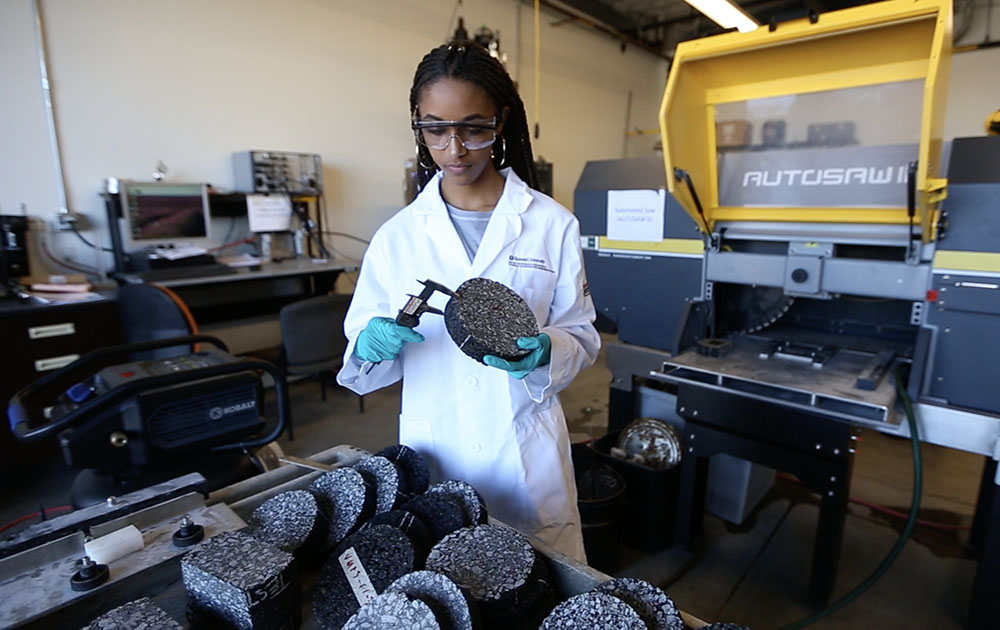
Creating something other people will use in their daily lives really excites me.
Sidney M. Philadelphia, PA
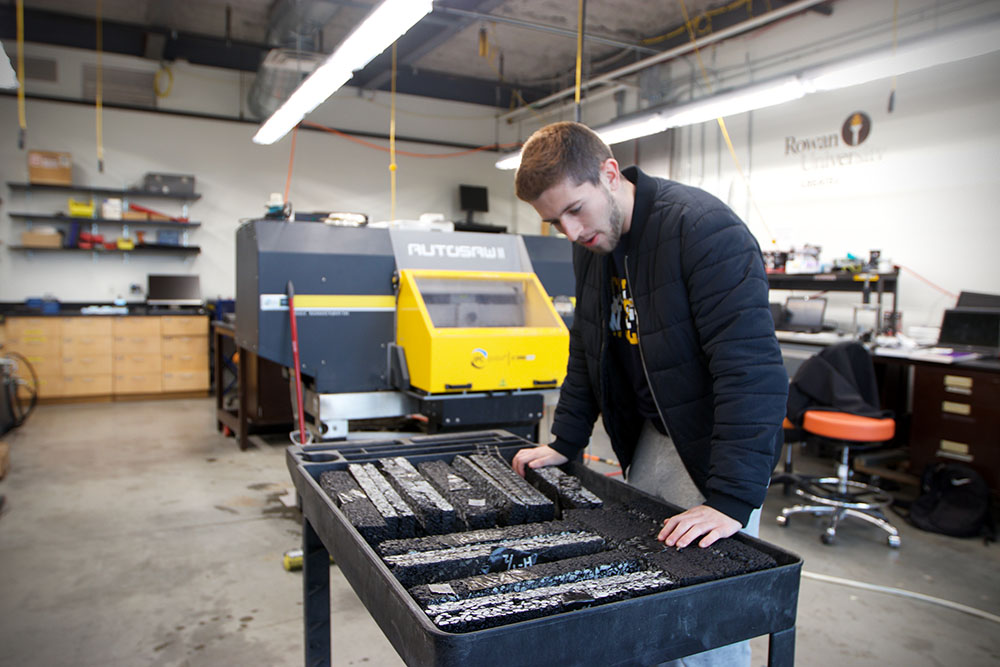
After touring Rowan, I immediately applied. I fell in love with the intense engineering program and building reconstruction.
Joe C. Mercer County, NJ

My program was action-oriented from the start, is really hands-on and does a great job in helping us to apply skills.
Kira R. Mercer County, NJ
Careers and outcomes

Upcoming virtual information sessions and events
Diving into civil engineering
Related programs